



What Is The 24 Hour Rule In Rockville Centre For ADHD?
ADHD doesn't follow a schedule. It shows up in classrooms, at home, and in moments when focus matters most. For families and educators in Rockville Centre, managing the condition means more than medication and psychotherapy—it means knowing when to step back. That's where the 24 Hour Rule comes in. It's not a law. It's not a clinical protocol. But it's become a practical guideline that helps schools and parents handle behavioral incidents without making things worse.

The rule is simple. After a significant outburst, meltdown, or disciplinary issue involving a student with ADHD, wait 24 hours before diving into consequences or problem-solving. No heated meetings. No immediate punishment. Just space. Because when emotions are running high, decisions tend to be reactive—and reactive decisions rarely help anyone, especially kids who are already struggling to regulate themselves.
Why ADHD Makes Immediate Responses Risky
ADHD isn't just about distraction or hyperactivity. It's about impulsivity and emotional dysregulation. When something goes wrong—a classroom disruption, a refusal to follow instructions, a verbal outburst—the child's brain is already flooded. Adding pressure in that moment doesn't teach. It escalates. And for the adults involved, the instinct to address it right away can lead to responses that feel punitive rather than constructive.
The 24 Hour Rule acknowledges that reality. It gives everyone involved—student, parent, teacher—a chance to reset. The child gets time to calm down and process what happened. The adults get time to think through what actually needs to happen next. And when the conversation does happen, it's grounded in clarity, not frustration.
How Rockville Centre Schools Use the Rule
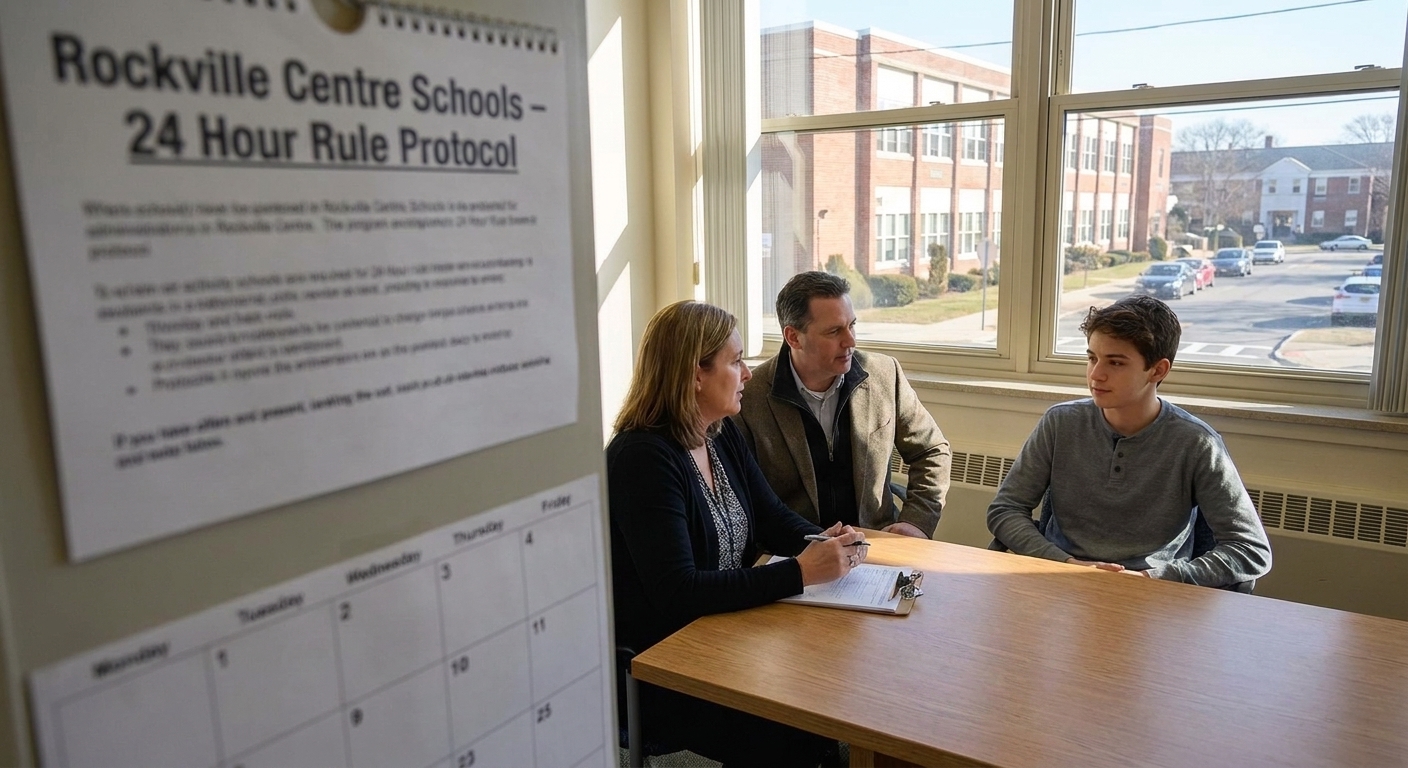
In Rockville Centre, the 24 Hour Rule often shows up in IEPs and behavioral support plans. When an incident occurs, teachers and administrators document it, notify parents, and then pause. No formal meetings are scheduled until the next day. No consequences are handed down in the heat of the moment. Instead, the student might spend time in a quiet space, talk with a counselor, or engage in a calming activity.
Parents are encouraged to follow the same approach at home. If the school calls about a behavioral issue, the instinct might be to confront the child immediately. But waiting until the next day—after everyone has had a chance to decompress—leads to better outcomes. The conversation becomes about understanding and problem-solving, not blame and punishment.
What Happens During the 24 Hours
The waiting period isn't passive. It's strategic. During those 24 hours, parents and educators can communicate with each other, review what happened, and plan a response that's fair and supportive. The student, meanwhile, has time to reflect without the pressure of an immediate confrontation. For many kids with ADHD, that space is critical. It allows them to move from a state of emotional overload to one where they can actually engage in a productive conversation.
Some schools use this time to involve counselors or behavioral specialists. Others simply let the student return to their routine, knowing that the follow-up will happen when everyone is ready. The key is that the delay is intentional, not avoidant. It's about timing the response for maximum effectiveness, not sweeping the issue under the rug.
Why the Rule Works
- Prevents Escalation: Immediate confrontation can turn a manageable situation into a full-blown crisis, especially for kids who struggle with emotional regulation.
- Encourages Reflection: Both students and adults benefit from time to think through what happened and why.
- Supports Better Communication: Conversations that happen after emotions have settled are more productive and less likely to damage relationships.
- Teaches Self-Regulation: Students learn that it's okay to take time before addressing problems, a skill that serves them well beyond the classroom.
- Reduces Impulsive Consequences: Adults avoid handing down punishments that might not fit the situation or that they'll later regret.
When the Rule Doesn't Apply
The 24 Hour Rule isn't a blanket policy. If a student poses an immediate safety risk to themselves or others, action needs to be taken right away. If a situation requires emergency intervention, waiting isn't an option. The rule is designed for behavioral incidents that, while disruptive or concerning, don't require an urgent response.
It's also not a free pass. The 24-hour delay doesn't mean the incident is forgotten or ignored. It means the response is delayed until it can be handled thoughtfully. Parents and educators still need to address what happened, set expectations, and implement consequences if necessary. The difference is that those steps happen with intention, not impulse.
What Parents Should Know
- Communicate with the School: If your child's IEP includes the 24 Hour Rule, make sure you understand how it's applied and what your role is during the waiting period.
- Stay Calm at Home: If you get a call about a behavioral issue, resist the urge to address it immediately. Wait until the next day when emotions have settled.
- Use the Time Wisely: Gather information, talk to teachers, and think through what you want to say before the follow-up conversation.
- Model Emotional Regulation: Your child is watching how you handle conflict. Waiting 24 hours shows them that it's okay to take time before reacting.
- Follow Through: The delay is about timing, not avoidance. Make sure the conversation happens and that your child understands what's expected moving forward.
What Educators Should Remember
- Document Everything: Even if you're waiting 24 hours to address the incident, make sure it's recorded accurately and shared with relevant parties.
- Coordinate with Parents: Use the waiting period to align on how the situation will be handled and what the next steps are.
- Provide Support During the Wait: Don't just send the student back to class and forget about it. Offer calming strategies, check-ins, or access to a counselor.
- Be Consistent: If the 24 Hour Rule is part of a student's plan, apply it consistently. Inconsistency undermines trust and effectiveness.
- Focus on Learning, Not Punishment: The goal is to help the student understand what went wrong and how to do better next time, not to make them feel ashamed.
The Long-Term Impact
The 24 Hour Rule isn't just about managing individual incidents. It's about building habits that support long-term success. Students with ADHD who experience this approach learn that adults in their lives are willing to pause, listen, and respond thoughtfully. That builds trust. It also teaches them that taking time to process emotions isn't a weakness—it's a strength.
For parents and educators, the rule reinforces the importance of intentional responses over reactive ones. It's a reminder that not every problem needs to be solved immediately, and that sometimes the best thing you can do is wait. Over time, that shift in approach can lead to fewer behavioral incidents, stronger relationships, and better outcomes for everyone involved. Support for adults facing ADHD challenges also emphasizes the value of structured approaches and intentional strategies.
Making It Work in Rockville Centre
Rockville Centre schools have embraced the 24 Hour Rule as part of a broader commitment to supporting students with ADHD and other behavioral challenges. But the rule only works when everyone—parents, teachers, administrators—is on the same page. That means clear communication, consistent application, and a shared understanding that the goal is to help students succeed, not to punish them for struggling.
If your child has ADHD and attends school in Rockville Centre, ask whether the 24 Hour Rule is part of their support plan. If it's not, consider advocating for it. And if it is, make sure you understand how it works and how you can support it at home. The rule isn't a magic fix, but it's a tool that can make a real difference when used correctly. Cognitive Behavioral Therapy and Dialectical Behavior Therapy are additional therapeutic approaches that can complement behavioral support strategies for students with ADHD.
Space to Breathe, Room to Grow
The 24 Hour Rule doesn't solve ADHD. It doesn't eliminate behavioral challenges or make difficult moments disappear. But it does create space—space for emotions to settle, for adults to think clearly, and for students to learn that mistakes don't define them. In a world that often demands immediate answers and instant consequences, that space is rare. And for families and educators in Rockville Centre, it's proving to be one of the most effective tools they have.
Let’s Support Your Child’s Success Together
We know that navigating ADHD can feel overwhelming, but you don’t have to do it alone. Our team is here to help you find the strategies and support that work best for your family. If you’re ready to take the next step or have questions about how the 24 Hour Rule can fit into your child’s plan, give us a call at 516-266-9110. When you’re ready, schedule an appointment and let’s work together to create a brighter path forward.

‹ Back
Recent Posts
-

-

-

Could Constant Worry Be Generalized Anxiety Disorder in Rockville Centre?
September 17, 2026
-

Do You Need Therapy or Medication Management in Rockville Centre?
September 3, 2026
-